
Papers in 2025
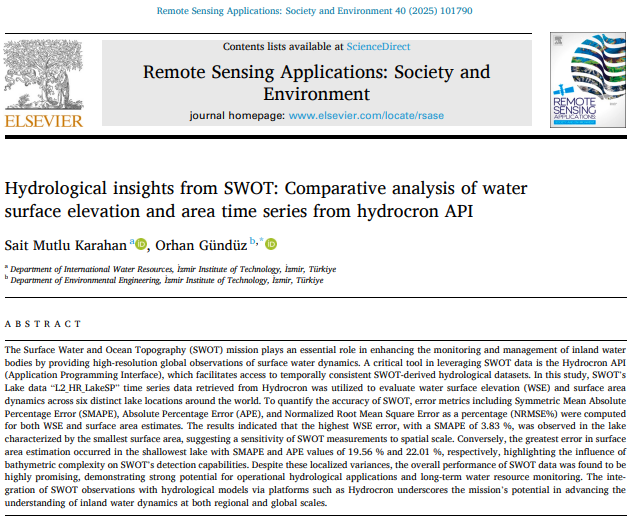
Hydrological insights from SWOT: Comparative analysis of water surface elevation and area time series from hydrocron API
The Surface Water and Ocean Topography (SWOT) mission plays an essential role in enhancing the monitoring and management of inland water bodies by providing high-resolution global observations of surface water dynamics. A critical tool in leveraging SWOT data is the Hydrocron API (Application Programming Interface), which facilitates access to temporally consistent SWOT-derived hydrological datasets. In this study, SWOT’s Lake data “L2_HR_LakeSP” time series data retrieved from Hydrocron was utilized to evaluate water surface elevation (WSE) and surface area dynamics across six distinct lake locations around the world. To quantify the accuracy of SWOT, error metrics including Symmetric Mean Absolute Percentage Error (SMAPE), Absolute Percentage Error (APE), and Normalized Root Mean Square Error as a percentage (NRMSE%) were computed for both WSE and surface area estimates. The results indicated that the highest WSE error, with a SMAPE of 3.83 %, was observed in the lake characterized by the smallest surface area, suggesting a sensitivity of SWOT measurements to spatial scale. Conversely, the greatest error in surface area estimation occurred in the shallowest lake with SMAPE and APE values of 19.56 % and 22.01 %, respectively, highlighting the influence of bathymetric complexity on SWOT’s detection capabilities. Despite these localized variances, the overall performance of SWOT data was found to be highly promising, demonstrating strong potential for operational hydrological applications and long-term water resource monitoring. The integration of SWOT observations with hydrological models via platforms such as Hydrocron underscores the mission’s potential in advancing the understanding of inland water dynamics at both regional and global scales.
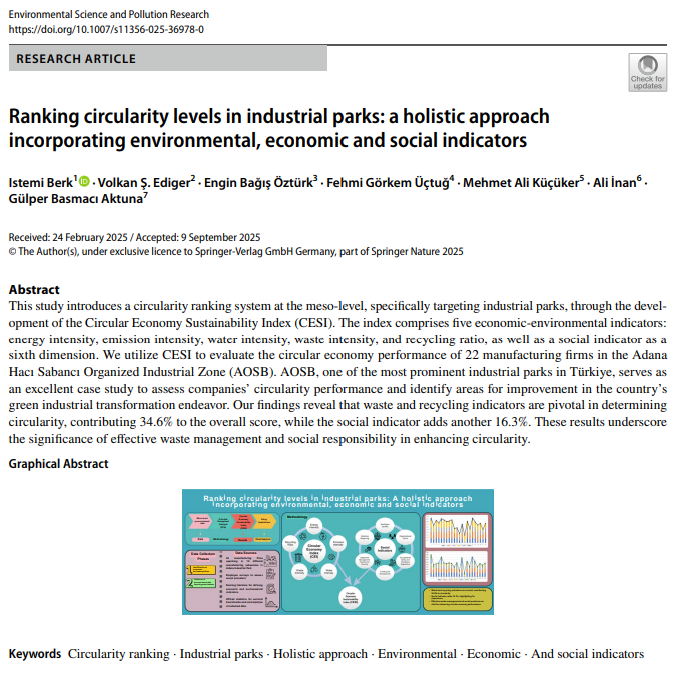
Ranking circularity levels in industrial parks: a holistic approach incorporating environmental, economic and social indicators
This study introduces a circularity ranking system at the meso-level, specifically targeting industrial parks, through the development of the Circular Economy Sustainability Index (CESI). The index comprises five economic-environmental indicators: energy intensity, emission intensity, water intensity, waste intensity, and recycling ratio, as well as a social indicator as a sixth dimension. We utilize CESI to evaluate the circular economy performance of 22 manufacturing firms in the Adana Hacı Sabancı Organized Industrial Zone (AOSB). AOSB, one of the most prominent industrial parks in Türkiye, serves as an excellent case study to assess companies’ circularity performance and identify areas for improvement in the country’s green industrial transformation endeavor. Our findings reveal that waste and recycling indicators are pivotal in determining circularity, contributing 34.6% to the overall score, while the social indicator adds another 16.3%. These results underscore the significance of effective waste management and social responsibility in enhancing circularity.
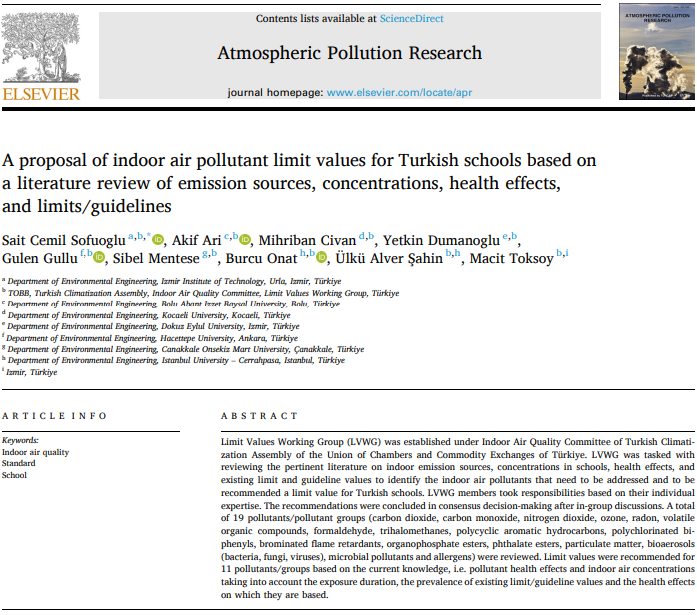
A proposal of indoor air pollutant limit values for Turkish schools based on a literature review of emission sources, concentrations, health effects, and limits/guidelines
Limit Values Working Group (LVWG) was established under Indoor Air Quality Committee of Turkish Climatization Assembly of the Union of Chambers and Commodity Exchanges of Türkiye. LVWG was tasked with reviewing the pertinent literature on indoor emission sources, concentrations in schools, health effects, and existing limit and guideline values to identify the indoor air pollutants that need to be addressed and to be recommended a limit value for Turkish schools. LVWG members took responsibilities based on their individual expertise. The recommendations were concluded in consensus decision-making after in-group discussions. A total of 19 pollutants/pollutant groups (carbon dioxide, carbon monoxide, nitrogen dioxide, ozone, radon, volatile organic compounds, formaldehyde, trihalomethanes, polycyclic aromatic hydrocarbons, polychlorinated biphenyls, brominated flame retardants, organophosphate esters, phthalate esters, particulate matter, bioaerosols (bacteria, fungi, viruses), microbial pollutants and allergens) were reviewed. Limit values were recommended for 11 pollutants/groups based on the current knowledge, i.e. pollutant health effects and indoor air concentrations taking into account the exposure duration, the prevalence of existing limit/guideline values and the health effects on which they are based.
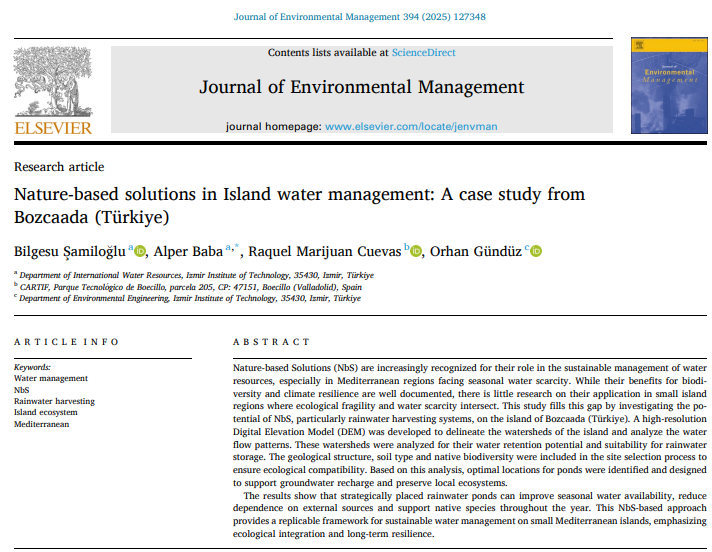
Nature-based solutions in Island water management: A case study from Bozcaada (Türkiye)
Nature-based Solutions (NbS) are increasingly recognized for their role in the sustainable management of water resources, especially in Mediterranean regions facing seasonal water scarcity. While their benefits for biodiversity and climate resilience are well documented, there is little research on their application in small island regions where ecological fragility and water scarcity intersect. This study fills this gap by investigating the potential of NbS, particularly rainwater harvesting systems, on the island of Bozcaada (Türkiye). A high-resolution
Digital Elevation Model (DEM) was developed to delineate the watersheds of the island and analyze the water flow patterns. These watersheds were analyzed for their water retention potential and suitability for rainwater storage. The geological structure, soil type and native biodiversity were included in the site selection process to ensure ecological compatibility. Based on this analysis, optimal locations for ponds were identified and designed to support groundwater recharge and preserve local ecosystems. The results show that strategically placed rainwater ponds can improve seasonal water availability, reduce dependence on external sources and support native species throughout the year. This NbS-based approach provides a replicable framework for sustainable water management on small Mediterranean islands, emphasizing ecological integration and long-term resilience.
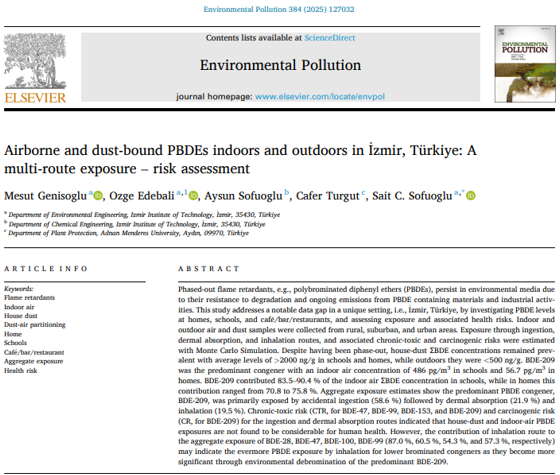
Airborne and dust-bound PBDEs indoors and outdoors in İzmir, Türkiye: A multi-route exposure – risk assessment
Phased-out flame retardants, e.g., polybrominated diphenyl ethers (PBDEs), persist in environmental media due to their resistance to degradation and ongoing emissions from PBDE containing materials and industrial activities. This study addresses a notable data gap in a unique setting, i.e., İzmir, Türkiye, by investigating PBDE levels at homes, schools, and café/bar/restaurants, and assessing exposure and associated health risks. Indoor and outdoor air and dust samples were collected from rural, suburban, and urban areas. Exposure through ingestion, dermal absorption, and inhalation routes, and associated chronic-toxic and carcinogenic risks were estimated with Monte Carlo Simulation. Despite having been phase-out, house-dust ƩBDE concentrations remained prevalent with average levels of >2000 ng/g in schools and homes, while outdoors they were <500 ng/g. BDE-209 was the predominant congener with an indoor air concentration of 486 pg/m3 in schools and 56.7 pg/m3 in homes. BDE-209 contributed 83.5–90.4 % of the indoor air ƩBDE concentration in schools, while in homes this contribution ranged from 70.8 to 75.8 %. Aggregate exposure estimates show the predominant PBDE congener, BDE-209, was primarily exposed by accidental ingestion (58.6 %) followed by dermal absorption (21.9 %) and inhalation (19.5 %). Chronic-toxic risk (CTR, for BDE-47, BDE-99, BDE-153, and BDE-209) and carcinogenic risk (CR, for BDE-209) for the ingestion and dermal absorption routes indicated that house-dust and indoor-air PBDE exposures are not found to be considerable for human health. However, the contribution of inhalation route to the aggregate exposure of BDE-28, BDE-47, BDE-100, BDE-99 (87.0 %, 60.5 %, 54.3 %, and 57.3 %, respectively) may indicate the evermore PBDE exposure by inhalation for lower brominated congeners as they become more significant through environmental debromination of the predominant BDE-209.
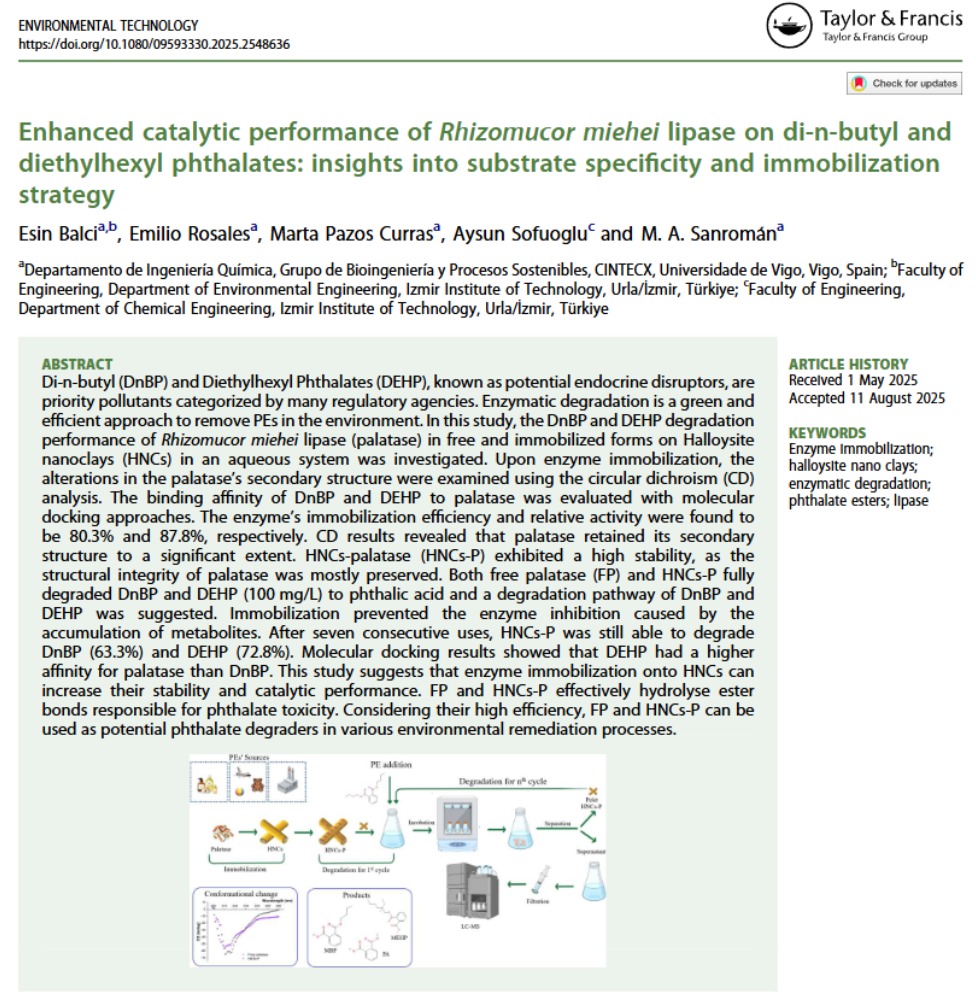
Enhanced catalytic performance of Rhizomucor miehei lipase on di-n-butyl and diethylhexyl phthalates: insights into substrate specificity and immobilization strategy
Di-n-butyl (DnBP) and Diethylhexyl Phthalates (DEHP), known as potential endocrine disruptors, are priority pollutants categorized by many regulatory agencies. Enzymatic degradation is a green and efficient approach to remove PEs in the environment. In this study, the DnBP and DEHP degradation performance of Rhizomucor miehei lipase (palatase) in free and immobilized forms on Halloysite nanoclays (HNCs) in an aqueous system was investigated. Upon enzyme immobilization, the alterations in the palatase’s secondary structure were examined using the circular dichroism (CD) analysis. The binding affinity of DnBP and DEHP to palatase was evaluated with molecular docking approaches. The enzyme’s immobilization efficiency and relative activity were found to be 80.3% and 87.8%, respectively. CD results revealed that palatase retained its secondary structure to a significant extent. HNCs-palatase (HNCs-P) exhibited a high stability, as the structural integrity of palatase was mostly preserved. Both free palatase (FP) and HNCs-P fully degraded DnBP and DEHP (100 mg/L) to phthalic acid and a degradation pathway of DnBP and DEHP was suggested. Immobilization prevented the enzyme inhibition caused by the accumulation of metabolites. After seven consecutive uses, HNCs-P was still able to degrade DnBP (63.3%) and DEHP (72.8%). Molecular docking results showed that DEHP had a higher affinity for palatase than DnBP. This study suggests that enzyme immobilization onto HNCs can increase their stability and catalytic performance. FP and HNCs-P effectively hydrolyse ester bonds responsible for phthalate toxicity. Considering their high efficiency, FP and HNCs-P can be used as potential phthalate degraders in various environmental remediation processes.
Effects of Industrial and Domestic Wastewater Treatment Plants on Microplastic Pollution in an Urban River in Türkiye
Microplastic (MP) contamination in inland aquatic systems is a growing environmental concern due to its persistence and potential ecological impacts. This study provides a comprehensive assessment of the occurrence, composition, and seasonal dynamics of MPs in two urban rivers—Nif Creek and Gediz River—in western Türkiye, which receive treated and untreated effluents from domestic and industrial wastewater treatment plants (WWTPs). A total of 20 river water and 3 sediment sampling stations were monitored across four seasons. MP concentrations ranged from 7 to 146 particles/L in water and from 9,867 to 136,177 particles/kg in sediments, with the highest abundances observed near WWTP outfalls and urban infrastructure. Polypropylene was the dominant polymer in water (59.1%) and WWTP effluents (44.4%), while polyethylene was most prevalent in sediments (60.2%). MPs were primarily within the 0.1–0.5 mm size range and were predominantly transparent in colour. Statistical analyses indicated significant positive correlations between MP abundance and key water quality parameters, including chemical oxygen demand, total suspended solids, and selected heavy metals (e.g., Zn, Cd, Ni). The polymeric composition of MPs reflected both urban and industrial sources, with variations in polymer profiles linked to spatial and seasonal factors. Compared to values reported in European freshwater systems, MP levels in the studied rivers were considerably higher, underscoring the need for improved wastewater management and targeted monitoring efforts in urban river basins.
An experimental study on microplastic settling velocities in different water environments: Which factors shape the settling process?
Understanding the behavior of microplastics in aquatic environments is crucial, given their widespread presence and potential ecological impact. This study investigated the effects of biofilm formation and weathering processes on the settling rates of microplastics across different water matrices. To this end, nine different polymer types were examined in four distinct conditions—pristine, biofilm-coated, aged, and biofilm-coated after weathering—across three defined size categories. A total of 648 experimental results representing different conditions were analyzed. The results revealed that the settling velocities of microplastics ranging from 0.5 to 4.5 mm varied between 0.012 and 0.154 m/s. Polybutylene terephthalate and polyethylene terephthalate particles exhibited the fastest settling rates (0.154 and 0.145 m/s), whereas acrylonitrile butadiene styrene showed the slowest (0.012 m/s). Although microplastic density and size were found to be significant factors of settling
velocity, water matrix, biofilm formation, and weathering processes did not show a statistically significant difference under the conditions of this study. This was related to insufficient time for biofilm growth, limited structural changes due to weathering, and the controlled laboratory environment. Biofilm formation was observed to be more pronounced on rough and matte surfaces, while it was less prominent on shiny and slippery surfaces. Additionally, it was determined that weathering alters surface morphology and potential adsorption capacity, which plays a critical role in the environmental interactions of microplastics. Furthermore, the experimentally determined settling velocities were compared with theoretical estimations obtained using two different models from the literature. A comparison between the experimental settling data and theoretical models demonstrated a strong alignment with the models proposed by Waldschl¨ager and Schüttrumpf (2019) and
Akdogan and Guven (2024), particularly for microplastics with irregular shapes. These results suggest that such theoretical approaches can reliably predict the settling behavior of specific polymer types. Overall, the findings underscore the practical applicability of these models for estimating the transport and fate of microplastics in natural aquatic systems, offering a valuable foundation for future environmental assessments.
Analysis of microplastic flux from the Gediz River to the Aegean Sea: A modeling study for environmental management
It is critical to determine the abundance of microplastics in terrestrial inland waters, understand their fate and transport mechanisms, and reveal their status in aquatic environments. This study aimed to develop and calibrate a mathematical model to simulate microplastic (MP) pollution in the Gediz River Basin, Türkiye, which focused on MP fate and transport under existing conditions and various management scenarios. The baseline scenario revealed that, despite a ninefold difference in flow rates, the midstream and upstream parts of the basin also exhibited significant contamination, with an average concentration of 25 n/L compared to the downstream average of 29 n/L. The model was later simulated to test the effects of various mitigation scenarios including but not limited to reducing MP discharges from wastewater treatment plants (WWTPs) and implementing vegetative barriers in tributaries. Scenario 4, which involves reducing MP concentrations in upstream tributaries with vegetative barriers, achieved the highest average reduction across all segments (32 %) and specifically in the downstream area (47 %). In contrast, Scenario 1, aimed at reducing wastewater discharges from urban and industrial WWTPs through water reclamation, and Scenario 2, which focused on eliminating MP in Organized Industrial Zone (OIZ) discharges by changing industrial inputs, achieved the most effective MP reductions in the upper basin, with reductions of 20 % and 17 %, respectively. Scenario 3, targeting flow reduction and accumulation through constructed wetlands, had minimal impact, with reductions close to 0 % in most areas. These results highlight the need for comprehensive approaches to effectively reduce MP pollution, particularly in managing upstream and tributary sources.
A holistic overview of the applications of GRACE‑observed terrestrial water storage in hydrology and climate science
Terrestrial Water Storage (TWS) represents a vital element of the hydrological cycle, with its fluctuations significantly impacting the climate of the Earth and its ecological balance. Since its launch in 2002, the Gravity Recovery and Climate Experiment (GRACE) satellite mission has revolutionized the ability to observe and analyze large-scale mass changes within Earth’s system components. This paper offers a comprehensive and current overview of GRACE satellite gravimetry, highlighting its relevance to hydrological and climate-related studies. It outlines the fundamental measurement principles of the GRACE mission, provides an in-depth explanation of GRACE data products (including spherical harmonic and mascon solutions), examines emerging trends in GRACE-based research, and reviews key applications in hydrology and climate science. Additionally, it addresses the major challenges in utilizing GRACE data and explores promising avenues for future research and applications.
Understanding the role of a specific microenvironment in personal exposure to semivolatile organic compounds using silicone wristbands
Assessment of personal exposure to semi-volatile organic compounds was facilitated using silicone wristbands (SWBs), an easy-to-use sampler that reflects total inhalation and dermal exposure from all the microenvironments and the activities in which the user was involved. Hence, SWBs help understand exposure from various routes, activities, and microenvironments. Offices are critical microenvironments where workers spend one-third of their daily time on weekdays; hence exposure from offices should be more extensively studied. This study aimed to investigate the personal exposure of university personnel and elaborate on the contribution of the exposure due to the office air to their overall exposure using SWBs. One SWB was worn by the participant, and another was hung in their office. After seven days of sampling on the wrist, exposure to polycyclic aromatic hydrocarbons (PAHs) was found to be related to combustion activities at home or from open fire, whereas exposure to organophosphate esters and phthalates was suggested to originate from building materials, such as flooring materials and paints, and consumer products, e.g. mattresses and furniture. PAHs in the participants’ offices were influenced by the transport of outdoor air and phthalates from the ceiling material. Then, we estimated the equivalent air concentrations using the SWBs sampled from the offices and previously developed sampling rates and partition coefficients. The estimated office air exposure contributions to total inhalation and dermal exposure were 83%, 51%, and 39% for fluorene, tri(n-butyl) phosphate, and tris(2-chloro isopropyl) phosphate, respectively. These findings were consistent with the statistical analysis of personal data. To conclude, this study highlighted the importance of specific microenvironments in our exposure to particular SVOCs, offering strategies for indoor air quality management and human health risk assessment.

Nanoarchitectonics approach to graphite/starch-supported bioelectrode for enhanced supercapacitor performance
In this study, a novel bioelectrode composed of commercial potato starch and graphite was synthesized and evaluated for supercapacitor applications. The developed electrode exhibited a high specific capacitance of 355.6 F/g at 0.5 A/g and demonstrated exceptional cyclic stability with 93.5% retention after 5000 charge/discharge cycles.
By increasing graphite content, the resulting porous structure enhanced both electrical conductivity and ion diffusion capacity of the electrode. This bioelectrode, combining low-cost, biodegradable components with high electrochemical performance, stands as a strong candidate for use in portable electronics, hybrid vehicles, and grid-scale energy storage systems—advancing the goals of sustainable and circular energy technologies.

A comprehensive life cycle impact evaluation of hydrogen production processes for cleaner applications
This study evaluates and compares three different hydrogen production routes—coal gasification, water electrolysis, and a hybrid dark fermentation–microbial electrolysis cell (DF-MEC)—from a life cycle assessment (LCA) perspective. The analysis encompasses atmospheric emissions and environmental impact categories to determine each method’s sustainability level.
The findings indicate that the electrolysis method yields the lowest total CO₂ emission (6.39 kg-CO₂/kg-H₂) and environmental burden, while the DF-MEC process achieves the highest negative biogenic CO₂ emission (−68.69 kg-CO₂/kg-H₂). In contrast, coal gasification exhibits the highest environmental impact and is considered the least sustainable scenario.
This comprehensive evaluation contributes to a deeper understanding of the environmental consequences of hydrogen production technologies and supports the global transition toward clean and sustainable energy systems.

Esterase-mediated degradation of dibutyl and diethylhexyl phthalates in aqueous and soil systems
A research article titled “Esterase-mediated degradation of dibutyl and di(2-ethylhexyl) phthalates in aqueous and soil systems” has been published in Chemosphere, authored by Dr. Esin Balcı (Research Assistant, Department of Environmental Engineering), Prof. Dr. Aysun Sofuoğlu (Faculty Member, Department of Chemical Engineering), and Prof. Dr. Gülşah Şanlı-Muhammed (Faculty Member, Department of Chemistry).
In this study, the degradation of phthalates—known endocrine-disrupting compounds—was investigated in both aqueous and soil systems using esterase enzymes derived from Geobacillus sp., isolated from the Balçova geothermal resources in İzmir, as well as esterase enzymes from Bacillus subtilis.

Derivation of soil hydraulic properties (SHPs) using a Physics-Based inverse calibration method and International soil moisture network database
This study used extensive soil moisture records to estimate “inverse-calibrated Soil Hydraulic Properties (SHPs)” using a multi-processing technique via high-performance computing clusters. Within this objective, a mass conservative numerical model was developed to solve the one-dimensional Richards Equation incorporating two different soil hydraulic models: the well-known van Genuchten Mualem (VGM) model and the relatively new Fredlund-Xing-Wang (FXW). A multiprocessing version of the Differential Evolution Algorithm (DEA) optimization technique was used for inverse calibration of the soil hydraulic parameters. For FXW, calibration statistics were calculated as means of the KGE’ (0.89 ± 0.1 and 0.83 ± 0.23), R (0.89 ± 0.1 and 0.85 ± 0.21) and ubRMSE (0.017 ± 0.01 and 0.015 ± 0.02) for the depths 50 and 100 cm, respectively. For VGM, calibration statistics were found as means of the KGE’ (0.87 ± 0.11 and 0.78 ± 0.22), R (0.90 ± 0.08 and 0.86 ± 0.17) and ubRMSE (0.019 ± 0.01 and 0.017 ± 0.01) for the same depths, respectively. The employed methodology had highly promising statistical performance for both FXW and VGM to derive SHPs. A comprehensive validation methodology was used to evaluate the reliability of derived SHPs. Correlation analysis showed that derived SHPs strongly correlated with the soil properties and environmental variables. Further, as a validation procedure, initial investigations were also conducted to explore the spatial transferability of the parameters. Despite the use of basic k-means clustering, the resulting soil hydraulic datasets showed statistical similarity or even improvement to hyper-resolution maps used in the literature. While the simulation model of the methodology has certain assumptions and limitations, this study proves that the ISMN database can be used to derive soil hydraulic properties and transfer these parameters to locations other than the calibration points. This study shows that FXW is a promising hydraulic model for the determination of soil moisture at root zone within the complete moisture range. The methodology can also be readily extended to other established soil moisture monitoring networks and potentially extended versions of “inverse-calibrated SHPs” and trained pedotransfer functions are considered to be valuable tools to estimate soil moisture profiles at the root zone.

Surface sediments as a sink and risk source for legacy POPs during waste management practices
“Surface sediments as a sink and risk source for legacy POPs during waste management practices” has been published in Environmental Pollution.
The study found that coastal sediments in a shipbreaking zone in Türkiye (Aliağa, İzmir) have alarmingly high levels of PCBs and PBDEs — persistent organic pollutants (POPs). These activities turn sediments into long-term pollution hotspots, posing ecological risks.
This work highlights the need for stricter waste practices and global action on POPs.

Life cycle assessment of black tea production and consumption in Türkiye: Insights from waste management scenarios
This study conducts a life cycle assessment (LCA) of tea production and consumption in Türkiye, the world leader in per capita tea consumption. Aiming to identify environmental hotspots and propose sustainable solutions, a cradle to-grave LCA was performed using CCaLC2 software, CML methodology, and the Ecoinvent 3.0 database. It covers cultivation, processing, transportation, and consumption stages, focusing on key environmental indicators like carbon footprint and acidification potential. The results reveal that consumption dominates the environmental footprint (91%) due to energy-intensive brewing methods. Cultivation and transportation contribute minimally (4% each). This highlights the need for promoting energy-efficient brewing practices and consumer adoption of renewable energy sources. The study also explores the environmental implications of different waste management strategies. Composting emerged as the most beneficial approach for reducing the carbon footprint and photochemical oxidants creation, while incineration might be preferable for other impact categories. This study underscores the importance of addressing energy consumption during tea brewing and encouraging renewable energy use among consumers. Additionally, it promotes composting as a crucial waste management strategy for a more sustainable tea value chain in Türkiye. These findings offer valuable insights for policymakers, industry players, and tea drinkers to make
informed decisions that minimize environmental impact.

Sleep quality: Design of bedroom ventilation and evaluation within the scope of current standards
Indoor air pollution is one of the leading environmental risks to public health considering people now spending
nearly 90 % of their day in indoor environments. A significant portion of this time indoors is devoted to sleeping, making it crucial to address the impact of indoor environmental conditions on sleep quality. International ventilation standards such as ASHRAE and CEN, as well as country-specific guidelines, offer valuable recommendations for ventilation design in residential buildings, including bedrooms. This study aims to evaluate the importance of determining ventilation rates in sleeping spaces using Indoor Air Quality Procedure (IAQP) compared to Ventilation Rate Procedure (VRP) in accordance with current standards. Here, the IAQP approach for determining air flow rate is based on the CO2 balance by maintaining CO2 levels in any sleeping environment below specified upper limits of 750 ppm and 1000 ppm. This study focused on the adult population, which forms the majority of society, with analyses conducted for both single and double occupancy sleeping conditions.
The volume of environment where ventilation is not required during sleep (Vf) is inaccessible in conventional sleeping environments (10–21.6 m3 per person). Therefore, proper ventilation is of great importance for any sleeping space that is smaller than the Vf . The results of the analyses show that for the conventional sleeping volumes, CO2 levels reach 750 ppm (upper limit for comfortable sleep) in the first hour and increase to the disturbed sleep zone in about 2 h. Additionally, a chart outlining the necessary ventilation flow rates is suggested for maintaining maximum CO2 concentrations of 750 and 1000 ppm during different sleep durations and in
various sleeping environments with varying volumes. Finally, the ventilation rates determined based on unit area and/or occupancy levels in standards (referred to as VRP) may not always be adequate or may be excessive in order to maintain CO2 concentrations below the recommended limits of 750 and 1000 ppm. It is advised to utilize demand-controlled ventilation by considering the system design as recommended by IAQP.

A New Electro-Biomembrane Integrated Renewable-Based System to Produce Power, Fresh Water and Hydrogen for Sustainable Communities
As global warming intensifies, the need for efficient and sustainable energy solutions is more critical than ever. In our latest study, we developed a parabolic trough collector (PTC) solar system-powered electro-biomembrane unit, integrating solar thermal energy and biomass to simultaneously produce freshwater, electricity, and biohydrogen. This multi-generation system combines five key subsystems: a PTC solar system, organic Rankine cycle, steam Rankine cycle, multi-stage flash desalination unit, and an electro-biomembrane reactor. Our findings highlight the significant role of solar irradiation in system performance, demonstrating the ability to harness renewable energy efficiently. Notably, the system achieves a biohydrogen production of 328.56 kg per day, showcasing its potential for sustainable hydrogen generation while contributing to clean water and power production.

The role of effective catalysts for hydrogen production: A performance evaluation
Hydrogen (H2) is a promising clean energy carrier, offering a sustainable alternative for fuel, storage, and industrial applications. However, large-scale H2 production remains limited by high costs and low yields. Recent advancements in catalyst technologies have significantly improved efficiency in biological, thermochemical, and water-based processes. Catalysts such as iron, nickel, titanium oxide, and silver have been shown to enhance H2 production rates, while optimizing reactor design, catalyst dosage, temperature, and pH further improves performance. In dark fermentation, the use of metal catalysts increases biological H2 yield by 3.2–38%, highlighting their potential in boosting production while minimizing environmental impact. This study emphasizes the crucial role of catalysts in advancing sustainable hydrogen production and identifies key challenges for future research and large-scale implementation

Experimental study for recovery of heavy metals from contaminated soil using arbuscular mycorrhizal fungi
Soil micro-organisms like arbuscular mycorrhizal fungi can provide beneficial symbiosis to their host plant and have been adopted to recover metal-polluted soils. This study investigates the removal of heavy metals from soil using phytoremediation in the presence of fungi. The results indicate that the sunflower plant illustrates the highest copper accumulation, with 18.55 mg/kg. In contrast, sunflower and sorghum controls (non-microorganisms) showed weak capability to transfer copper through plant biomass with 0.91 and 0.97 mg/kg, respectively. Both plants showed that phytoremediation can be a promising approach to providing sustainable solutions for soil heavy metal contamination in the presence of fungi.

A comparative evaluation of dark fermentative bioreactor configurations for enhanced hydrogen production
The growing demand for renewable energy has increased interest in biohydrogen (bioH2) production as a clean and sustainable fuel alternative. Among various production methods, dark fermentation offers a promising pathway for large-scale and cost-effective bioH2 production. This study examines different bioreactor configurations, including anaerobic sequencing batch, continuous stirred, up-flow, fixed-bed, and membrane reactors, to evaluate their efficiency in bioH2 production. The findings indicate that continuously stirred reactors are the most widely used due to their economic feasibility, while membrane and fixed-bed reactors achieve higher bioH2 yields. By performing a bibliometric analysis, this review provides a comprehensive overview of historical and current developments in bioreactor technologies, addressing key parameters that influence performance and strategies for enhancing efficiency