
Papers in 2026
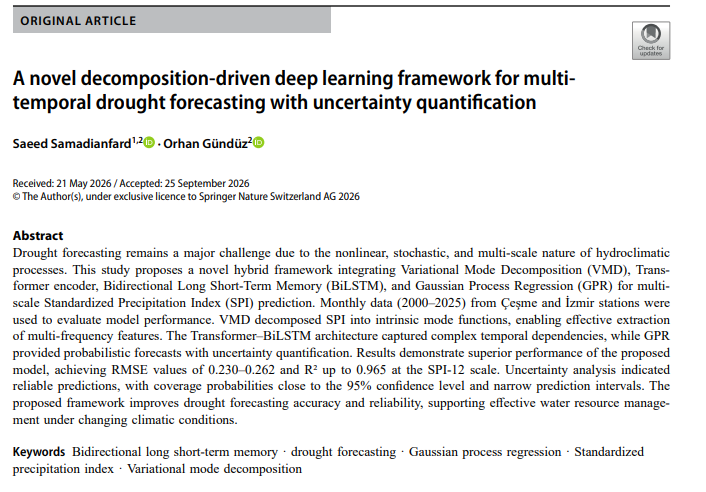
A novel decomposition-driven deep learning framework for multi-temporal drought forecasting with uncertainty quantification
Drought forecasting remains a major challenge due to the nonlinear, stochastic, and multi-scale nature of hydroclimatic processes. This study proposes a novel hybrid framework integrating Variational Mode Decomposition (VMD), Transformer encoder, Bidirectional Long Short-Term Memory (BiLSTM), and Gaussian Process Regression (GPR) for multiscale Standardized Precipitation Index (SPI) prediction. Monthly data (2000–2025) from Çeşme and İzmir stations were used to evaluate model performance. VMD decomposed SPI into intrinsic mode functions, enabling effective extraction of multi-frequency features. The Transformer–BiLSTM architecture captured complex temporal dependencies, while GPR
provided probabilistic forecasts with uncertainty quantification. Results demonstrate superior performance of the proposed model, achieving RMSE values of 0.230–0.262 and R² up to 0.965 at the SPI-12 scale. Uncertainty analysis indicated reliable predictions, with coverage probabilities close to the 95% confidence level and narrow prediction intervals. The proposed framework improves drought forecasting accuracy and reliability, supporting effective water resource management under changing climatic conditions.
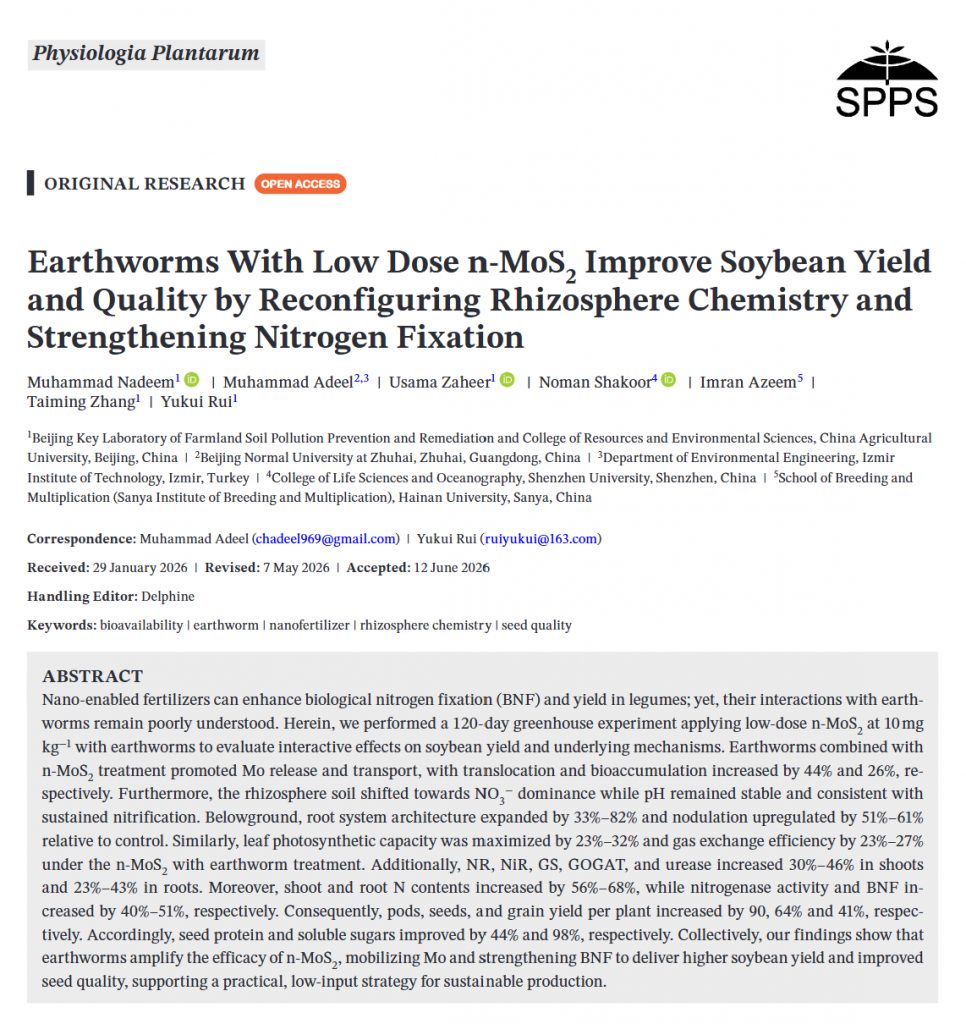
Earthworms With Low Dose n-MoS2 Improve Soybean Yieldand Quality by Reconfiguring Rhizosphere Chemistry and Strengthening Nitrogen Fixation
Nano-enabled fertilizers can enhance biological nitrogen fixation (BNF) and yield in legumes; yet, their interactions with earth-worms remain poorly understood. Herein, we performed a 120-day greenhouse experiment applying low-dose n-MoS2 at 10 mgkg−1 with earthworms to evaluate interactive effects on soybean yield and underlying mechanisms. Earthworms combined withn-MoS2 treatment promoted Mo release and transport, with translocation and bioaccumulation increased by 44% and 26%, re-spectively. Furthermore, the rhizosphere soil shifted towards NO3− dominance while pH remained stable and consistent withsustained nitrification. Belowground, root system architecture expanded by 33%–82% and nodulation upregulated by 51%–61%relative to control. Similarly, leaf photosynthetic capacity was maximized by 23%–32% and gas exchange efficiency by 23%–27%under the n-MoS2 with earthworm treatment. Additionally, NR, NiR, GS, GOGAT, and urease increased 30%–46% in shootsand 23%–43% in roots. Moreover, shoot and root N contents increased by 56%–68%, while nitrogenase activity and BNF in-creased by 40%–51%, respectively. Consequently, pods, seeds, and grain yield per plant increased by 90, 64% and 41%, respec-tively. Accordingly, seed protein and soluble sugars improved by 44% and 98%, respectively. Collectively, our findings show thatearthworms amplify the efficacy of n-MoS2, mobilizing Mo and strengthening BNF to deliver higher soybean yield and improvedseed quality, supporting a practical, low-input strategy for sustainable production
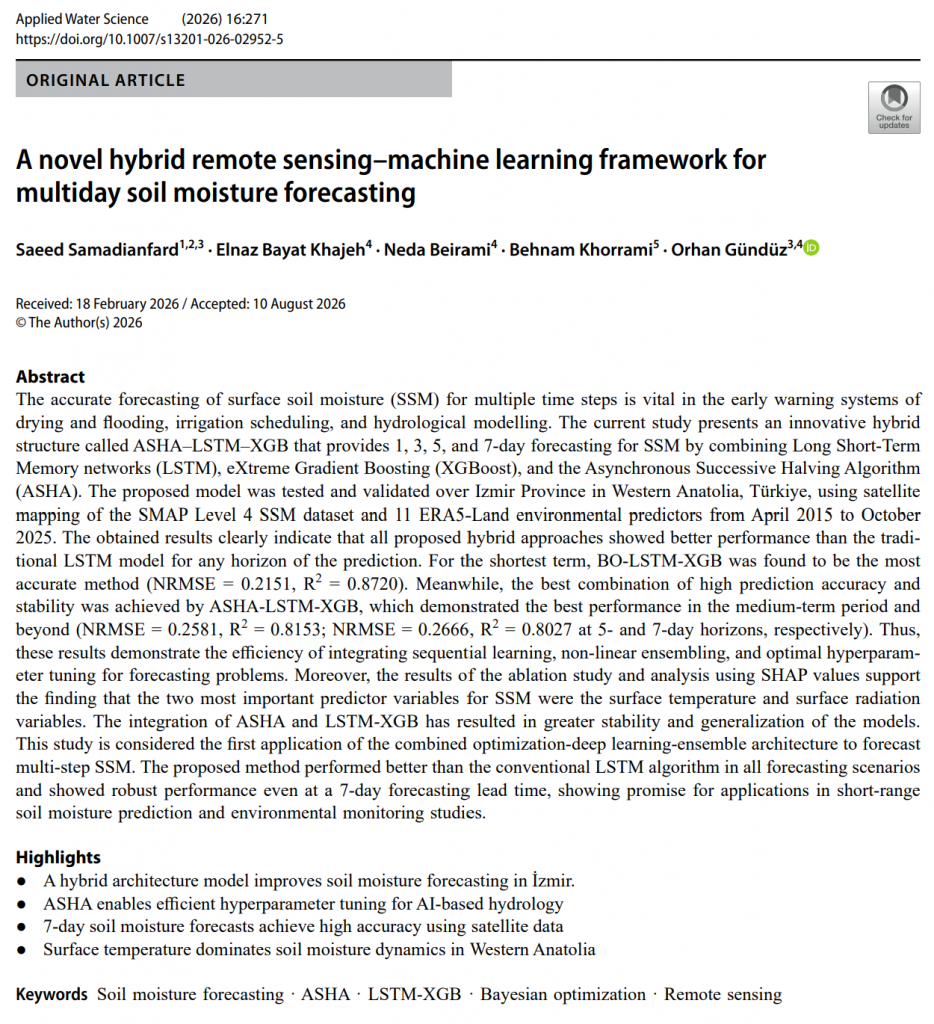
A novel hybrid remote sensing–machine learning framework for multiday soil moisture forecasting
The accurate forecasting of surface soil moisture (SSM) for multiple time steps is vital in the early warning systems of drying and flooding, irrigation scheduling, and hydrological modelling. The current study presents an innovative hybrid structure called ASHA–LSTM–XGB that provides 1, 3, 5, and 7-day forecasting for SSM by combining Long Short-Term Memory networks (LSTM), eXtreme Gradient Boosting (XGBoost), and the Asynchronous Successive Halving Algorithm (ASHA). The proposed model was tested and validated over Izmir Province in Western Anatolia, Türkiye, using satellite mapping of the SMAP Level 4 SSM dataset and 11 ERA5-Land environmental predictors from April 2015 to October 2025. The obtained results clearly indicate that all proposed hybrid approaches showed better performance than the traditional LSTM model for any horizon of the prediction. For the shortest term, BO-LSTM-XGB was found to be the most accurate method (NRMSE = 0.2151, R2 = 0.8720). Meanwhile, the best combination of high prediction accuracy and stability was achieved by ASHA-LSTM-XGB, which demonstrated the best performance in the medium-term period and beyond (NRMSE = 0.2581, R2 = 0.8153; NRMSE = 0.2666, R2 = 0.8027 at 5- and 7-day horizons, respectively). Thus, these results demonstrate the efficiency of integrating sequential learning, non-linear ensembling, and optimal hyperparameter tuning for forecasting problems. Moreover, the results of the ablation study and analysis using SHAP values support the finding that the two most important predictor variables for SSM were the surface temperature and surface radiation variables. The integration of ASHA and LSTM-XGB has resulted in greater stability and generalization of the models. This study is considered the first application of the combined optimization-deep learning-ensemble architecture to forecast multi-step SSM. The proposed method performed better than the conventional LSTM algorithm in all forecasting scenarios and showed robust performance even at a 7-day forecasting lead time, showing promise for applications in short-range soil moisture prediction and environmental monitoring studies.
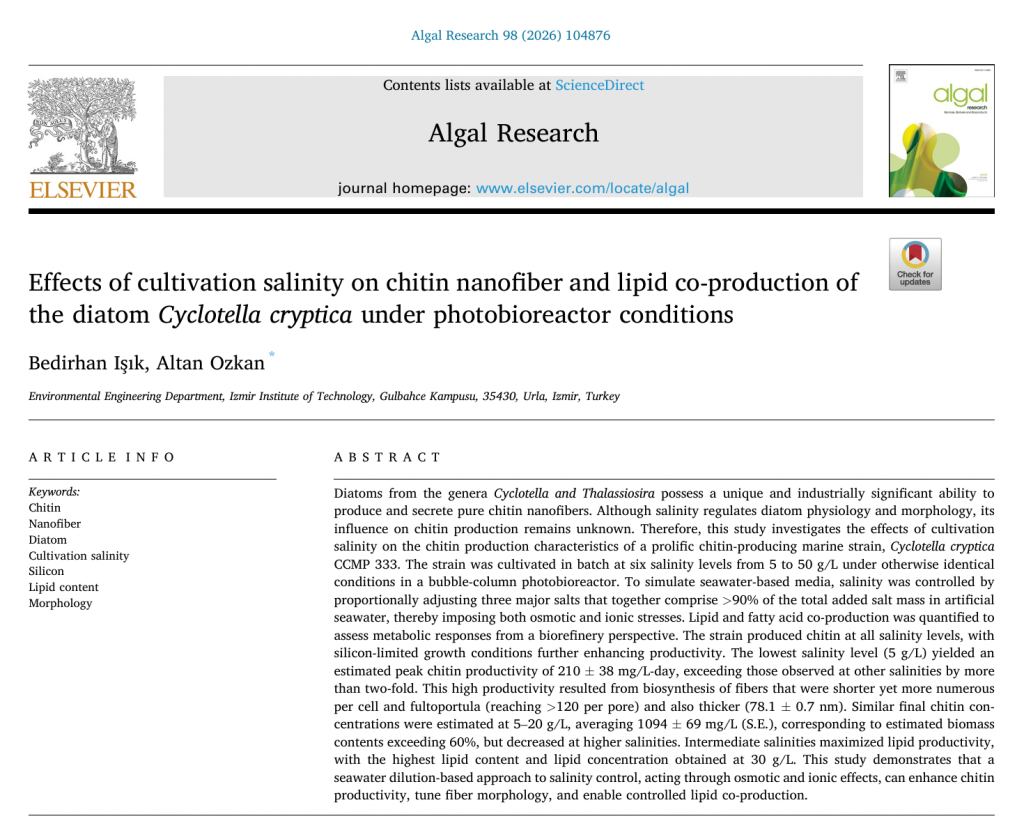
Effects of cultivation salinity on chitin nanofiber and lipid co-production of the diatom Cyclotella cryptica under photobioreactor conditions
Diatoms from the genera Cyclotella and Thalassiosira possess a unique and industrially significant ability to produce and secrete pure chitin nanofibers. Although salinity regulates diatom physiology and morphology, its influence on chitin production remains unknown. Therefore, this study investigates the effects of cultivation salinity on the chitin production characteristics of a prolific chitin-producing marine strain, Cyclotella cryptica CCMP 333. The strain was cultivated in batch at six salinity levels from 5 to 50 g/L under otherwise identical conditions in a bubble-column photobioreactor. To simulate seawater-based media, salinity was controlled by proportionally adjusting three major salts that together comprise >90% of the total added salt mass in artificial seawater, thereby imposing both osmotic and ionic stresses. Lipid and fatty acid co-production was quantified to assess metabolic responses from a biorefinery perspective. The strain produced chitin at all salinity levels, with silicon-limited growth conditions further enhancing productivity. The lowest salinity level (5 g/L) yielded an estimated peak chitin productivity of 210 ± 38 mg/L-day, exceeding those observed at other salinities by more than two-fold. This high productivity resulted from biosynthesis of fibers that were shorter yet more numerous per cell and fultoportula (reaching >120 per pore) and also thicker (78.1 ± 0.7 nm). Similar final chitin concentrations were estimated at 5–20 g/L, averaging 1094 ± 69 mg/L (S.E.), corresponding to estimated biomass contents exceeding 60%, but decreased at higher salinities. Intermediate salinities maximized lipid productivity, with the highest lipid content and lipid concentration obtained at 30 g/L. This study demonstrates that a seawater dilution-based approach to salinity control, acting through osmotic and ionic effects, can enhance chitin productivity, tune fiber morphology, and enable controlled lipid co-production.
Performance of two-step moving bed biofilm reactor (MBBR) process for the treatment of P-nitrophenol
P-nitrophenol, a significant pollutant used in industry for various purposes, negatively impacts biomass growth as it is an uncoupler of oxidative phosphorylation. Therefore, properly treating PNP and rendering it environmentally harmless are crucial. While studies on its treatment using suspended biomass or certain biofilm reactors have been conducted in the literature, studies using serially-connected moving-bed biofilm reactors (MBBRs) are extremely limited. In the present study, PNP treatment up to an influent concentration of 100 mg/L was investigated using two serially-connected MBBR processes, and the effects of PNP on COD removal, nitrification performance, and biofilm density were also thoroughly investigated. The study determined that at a PNP loading of 50 mg/(L·d), PNP removal reached up to 100%; the first reactor was primarily responsible for organic matter removal, and the second reactor acted as a polishing step. PNP removal decreased as the PNP loading rate was increased from 50 to 100 mg/(L·d); in parallel with this, a decline in nitrification performance was observed, ammonium accumulation occurred, particularly in MBBR-1, and an increase in COD concentrations in the system effluent was noted. The study demonstrated effective biological removal of PNP, with negligible contribution from adsorption. The MBBR process successfully treated PNP up to a concentration of 50 mg/L (loading up to 50 mg/(L·d)) without any by-product accumulation.

Advancements in Asbestos Detection: A Study on Stack Dust, Settled Dust, and Magnesite Ore within the Refractory Industry
This study evaluates asbestos contamination in magnesite ore, stack dust, and settled dust from a refractory production facility using scanning electron microscopy (SEM) and transmission electron microscopy (TEM). SEM analyses identified chrysotile fibers in stack and settled dust at concentrations ranging from 0.00001 to 0.00003 structures/mL, while TEM confirmed chrysotile only in settled dust, with up to 0.000012 structures/mL detected. In stack dust, TEM instead revealed nonasbestiform serpentine minerals such as lizardite. Given that most results were near or below the limit of quantification (LOQ), the findings are interpreted as indicative rather than conclusive. The results highlight discrepancies between SEM and TEM due to methodological and detection-limit differences, emphasizing the need for multitechnique approaches to improve accuracy in low-concentration environments. This research underscores the occupational and environmental relevance of monitoring naturally occurring asbestos in industrial raw materials and airborne dust, offering insights for regulatory decision-making and the development of safer industrial practices.
Micropollutant removal from agricultural drainage waters by nanofiltration and reverse osmosis processes
The recovery of agricultural drainage water is crucial for sustainable irrigation, but the presence of pesticides and salinity poses significant obstacles to recovery. This study aimed to evaluate the performance of nanofiltration (NF) and reverse osmosis (RO) membranes (NF270, NF90, BW30) in the treatment of synthetic drainage water and, in particular, to elu cidate their pesticide rejection mechanisms. NF90 and BW30 membranes demonstrated exceptionally high rejection performance (>88%) in the presence of five selected pesticides and salt. Conversely, the NF270 membrane exhibited comparably lower rejection performances, especially for atrazine and imidacloprid. The rejection performance of the membranes was also impacted by the mode of filtration due to different hydrodynamic conditions; the rejection performance improved in the cross-flow mode of operation. This improve ment is attributed to the mitigation of concentration polarization. Process modelling confirmed that a full-scale RO system could produce high-quality irrigation water with a temperature-dependent specific energy consumption of 0.59 kWh m−3 at 20 °C. While dense membranes offer robust barrier properties, hydrodynamiccontrolis critical for maximizing the performance of loose NF membranes against hydrophobicmicropollutants.These findings demonstrate that advanced membrane technologies (NF and RO) can be safely used for recovering pesticide- and salt-bearing agricultural drainage water, which is important to mitigate global water scarcity.
Decoding Cross‑Correlated Hydrochemical Drivers for Robust Nutrient Concentration Prediction
The proper prediction of nutrient concentrations is important for the conservation of river ecosystems and water quality. For this reason, the purpose of this study was to predict daily nitrite and nitrate concentrations at the Sacramento River at Freeport, CA hydrological station on the Sacramento River in the US. Four model types were compared and assessed for their effectiveness, including Clockwork Recurrent Neural Network (CWRNN), Bidirectional Gated Recurrent Unit (BiGRU), a hybrid BiGRU-CWRNN, and an optimal hybrid Red-Billed Blue Magpie Optimizer-BiGRU-CWRNN (RBMO-BiGRU-CWRNN). Model performance was compared under six input scenarios that represented the synchronous, lagged, and cross-correlated effects of hydrological and physicochemical variables. The hybrid approaches performed consistently better than the standalone model approaches, and the RBMO-BiGRU-CWRNN produced the most accurate forecasts. The optimal hybrid model achieved the best predictive skill with R up to 0.899, the lowest RMSE (0.056 mg/l). The NS values of the models were over 0.73 for all models, indicating they had predicted motility with reasonable prediction structures. The models with the short-term lag scenarios produced the best reliability for predictive forecasts of both nitrite and nitrate concentrations, while the longest lags for each nutrient produced the weakest reliability for predictions, demonstrating the challenges longer horizon nutrient residuals present for water quality. Overall, the results confirm that hybrid recurrent networks, along with a metaheuristic optimization approach, can enhance the flexibility and accuracy of model reliability for predicting nutrients. This framework offers a potentially transferable methodological template for tracking nutrient behavior in large river systems, though empirical validation at additional stations and basins is necessary before broader application can be recommended. The approach provides a tool to inform water quality risk assessment within the Sacramento River Basin, with demonstrated robustness at the Freeport Station.
Global monitoring of PFAS in aquatic environments: Temporal trends, emerging profiles, and exposure assessment challenges
Per- and polyfluoroalkyl substances (PFAS) are persistent and widely distributed contaminants that pose increasing challenges for water quality management and environmental risk assessment. While regulatory ac tions have primarily focused on a limited number of long-chain legacy PFAS, global production and use patterns have shifted toward short-chain and structurally diverse replacement compounds with distinct environmental behaviors. Globally, aquatic systems play a central role in PFAS transport and exposure, integrating inputs from domestic and industrial discharges, urban runoff and atmospheric deposition. Nevertheless, conventional monitoring programs and regulatory frameworks remain largely based on targeted analyses of a narrow subset of PFAS, potentially underestimating real-world environmental and human exposure. This review critically syn thesizes global PFAS occurrence data reported from 2000 to 2025 period for rivers, lakes, estuaries, and pre cipitation. Particular emphasis is placed on temporal shifts in PFAS composition, analytical limitations, and the implications of emerging PFAS for exposure and risk assessment. By comparing targeted PFAS concentrations with findings from non-target screening, total oxidizable precursor (TOP) assays, and extractable organofluorine (EOF) measurements, this review demonstrates that routinely reported PFAS concentrations often represent only a fraction of the total fluorinated burden in aquatic environments. This mismatch has important consequences for environmental and human health risk assessment, as compliance with compound-specific regulatory thresholds may coexist with substantial unrecognized exposure to mobile, persistent, and analytically elusive PFAS. The increasing dominance of short-chain and precursor-derived compounds poses additional challenges to existing regulatory paradigms and to the long-term protection of water resources. The review concludes by identifying key knowledge gaps and highlighting the need for integrated monitoring and regulatory strategies that better capture cumulative PFAS exposure and associated risks in aquatic systems.
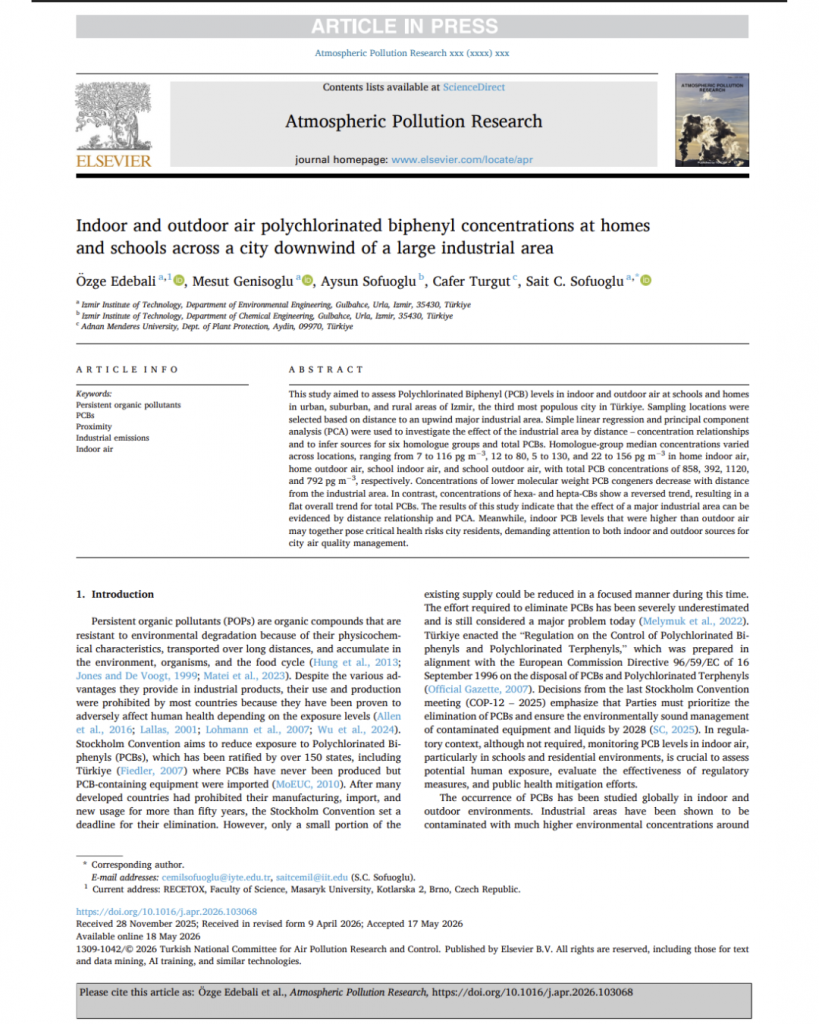
Indoor and outdoor air polychlorinated biphenyl concentrations at homes and schools across a city downwind of a large industrial area
This study aimed to assess Polychlorinated Biphenyl (PCB) levels in indoor and outdoor air at schools and homes in urban, suburban, and rural areas of Izmir, the third most populous city in Türkiye. Sampling locations were selected based on distance to an upwind major industrial area. Simple linear regression and principal component analysis (PCA) were used to investigate the effect of the industrial area by distance – concentration relationships and to infer sources for six homologue groups and total PCBs. Homologue-group median concentrations varied across locations, ranging from 7 to 116 pg m−3, 12 to 80, 5 to 130, and 22 to 156 pg m−3 in home indoor air, home outdoor air, school indoor air, and school outdoor air, with total PCB concentrations of 858, 392, 1120, and 792 pg m−3, respectively. Concentrations of lower molecular weight PCB congeners decrease with distance from the industrial area. In contrast, concentrations of hexa- and hepta-CBs show a reversed trend, resulting in a flat overall trend for total PCBs. The results of this study indicate that the effect of a major industrial area can be evidenced by distance relationship and PCA. Meanwhile, indoor PCB levels that were higher than outdoor air may together pose critical health risks city residents, demanding attention to both indoor and outdoor sources for city air quality management.
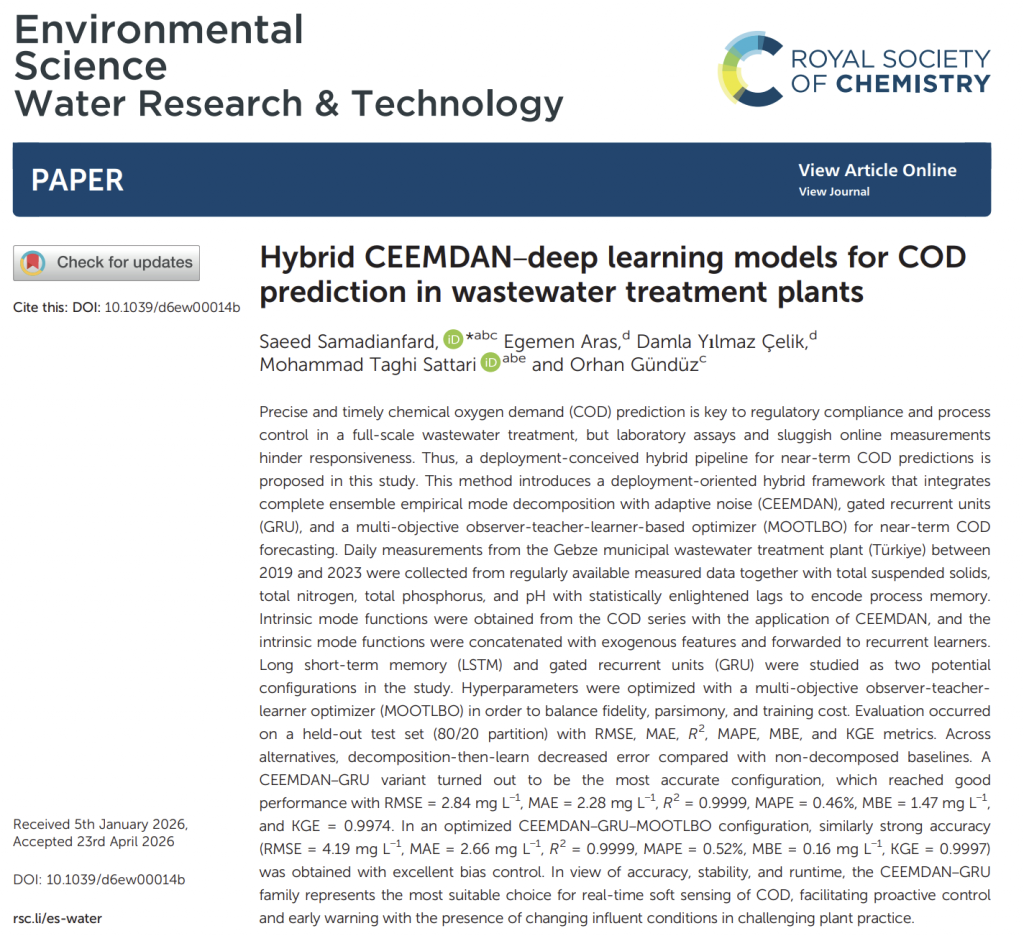
Hybrid CEEMDAN–deep learning models for COD prediction in wastewater treatment plants
Precise and timely chemical oxygen demand (COD) prediction is key to regulatory compliance and process control in a full-scale wastewater treatment, but laboratory assays and sluggish online measurements hinder responsiveness. Thus, a deployment-conceived hybrid pipeline for near-term COD predictions is proposed in this study. This method introduces a deployment-oriented hybrid framework that integrates complete ensemble empirical mode decomposition with adaptive noise (CEEMDAN), gated recurrent units (GRU), and a multi-objective observer-teacher-learner-based optimizer (MOOTLBO) for near-term COD forecasting. Daily measurements from the Gebze municipal wastewater treatment plant (Türkiye) between 2019 and 2023 were collected from regularly available measured data together with total suspended solids, total nitrogen, total phosphorus, and pH with statistically enlightened lags to encode process memory. Intrinsic mode functions were obtained from the COD series with the application of CEEMDAN, and the intrinsic mode functions were concatenated with exogenous features and forwarded to recurrent learners. Long short-term memory (LSTM) and gated recurrent units (GRU) were studied as two potential configurations in the study. Hyperparameters were optimized with a multi-objective observer-teacher-learner optimizer (MOOTLBO) in order to balance fidelity, parsimony, and training cost. Evaluation occurred on a held-out test set (80/20 partition) with RMSE, MAE, R2, MAPE, MBE, and KGE metrics. Across alternatives, decomposition-then-learn decreased error compared with non-decomposed baselines. A CEEMDAN–GRU variant turned out to be the most accurate configuration, which reached good performance with RMSE = 2.84 mg L−1, MAE = 2.28 mg L−1, R2 = 0.9999, MAPE = 0.46%, MBE = 1.47 mg L−1, and KGE = 0.9974. In an optimized CEEMDAN–GRU–MOOTLBO configuration, similarly strong accuracy (RMSE = 4.19 mg L−1, MAE = 2.66 mg L−1, R2 = 0.9999, MAPE = 0.52%, MBE = 0.16 mg L−1, KGE = 0.9997) was obtained with excellent bias control. In view of accuracy, stability, and runtime, the CEEMDAN–GRU family represents the most suitable choice for real-time soft sensing of COD, facilitating proactive control and early warning with the presence of changing influent conditions in challenging plant practice.
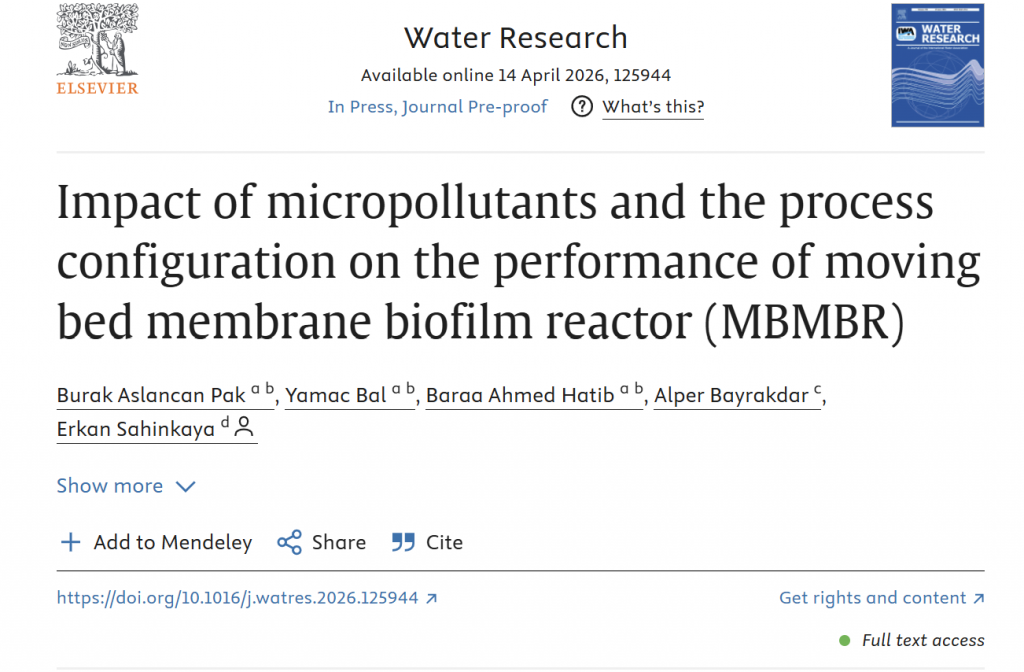
Impact of micropollutants and the process configuration on the performance of moving bed membrane biofilm reactor (MBMBR)
This study investigates the removal performance of selected micropollutants (ibuprofen, diclofenac, naproxen, carbamazepine, and triclosan) from domestic wastewater using a moving bed membrane biofilm reactor (MBMBR) process, consisting of two moving bed biofilm reactors in series followed by a membrane bioreactor (MBR). While the integration of MBBR and MBR processes leverages the advantages of both technologies, systematic studies on determining the optimal configuration, particularly in the presence of micropollutants, remain quite limited in the literature. Within the scope of the research, the effects of sludge recirculation (hybrid growth) from the MBR to different MBBR units on treatment performance were evaluated over 140 days with three different periods. The results showed that the COD removal efficiency, which was initially 98% (permeate COD <10 mg/L), gradually decreased following the introduction of micropollutants. The toxicity of micropollutants led to the accumulation of soluble microbial products (SMPs) and extracellular polymeric substances (EPSs), which increased the average supernatant COD up to 370 mg/L in the MBR unit. The membrane rejected most of the SMPs and EPSs, which improved the permeate quality (with permeate COD averaging less than 50 mg/L in all configurations) but increased the fouling potential. Nitrification almost entirely ceased (with permeate NH4+-N averaging 40 mg/L) during the second period (biofilm-only growth) as the system suffered from both micropollutant toxicity and the lack of microbial seeding by sludge recirculation. Regarding micropollutant removal, high efficiencies of over 75% were achieved for ibuprofen and triclosan, while removal efficiencies for recalcitrant compounds such as carbamazepine, diclofenac, and naproxen generally remained below 30%. This study highlights the impact of micropollutants on ammonia oxidizing bacteria (AOB), which may have critical role in micropollutant removal, and demonstrates the advantages of the hybrid growth mode in maintaining process stability.
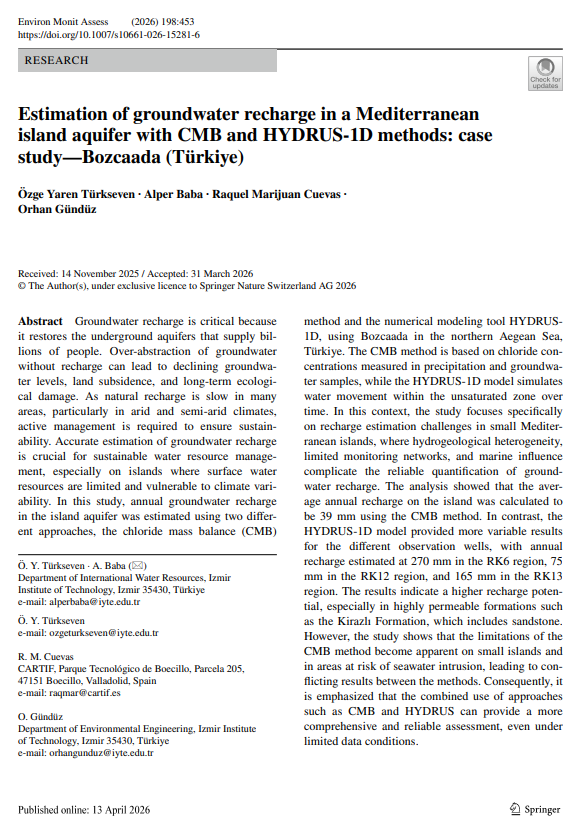
Estimation of groundwater recharge in a Mediterranean island aquifer with CMB and HYDRUS-1D methods: case study—Bozcaada (Türkiye)
Groundwater recharge is critical because it restores the underground aquifers that supply billions of people. Over-abstraction of groundwater without recharge can lead to declining groundwater levels, land subsidence, and long-term ecological damage. As natural recharge is slow in many areas, particularly in arid and semi-arid climates, active management is required to ensure sustainability. Accurate estimation of groundwater recharge is crucial for sustainable water resource management, especially on islands where surface water resources are limited and vulnerable to climate variability. In this study, annual groundwater recharge in the island aquifer was estimated using two different approaches, the chloride mass balance (CMB) method and the numerical modeling tool HYDRUS-1D, using Bozcaada in the northern Aegean Sea, Türkiye. The CMB method is based on chloride concentrations measured in precipitation and groundwater samples, while the HYDRUS-1D model simulates water movement within the unsaturated zone over time. In this context, the study focuses specifically on recharge estimation challenges in small Mediterranean islands, where hydrogeological heterogeneity, limited monitoring networks, and marine influence complicate the reliable quantification of groundwater recharge. The analysis showed that the average annual recharge on the island was calculated to be 39 mm using the CMB method. In contrast, the HYDRUS-1D model provided more variable results for the different observation wells, with annual recharge estimated at 270 mm in the RK6 region, 75 mm in the RK12 region, and 165 mm in the RK13 region. The results indicate a higher recharge potential, especially in highly permeable formations such as the Kirazlı Formation, which includes sandstone. However, the study shows that the limitations of the CMB method become apparent on small islands and in areas at risk of seawater intrusion, leading to conflicting results between the methods. Consequently, it is emphasized that the combined use of approaches such as CMB and HYDRUS can provide a more comprehensive and reliable assessment, even under limited data conditions.
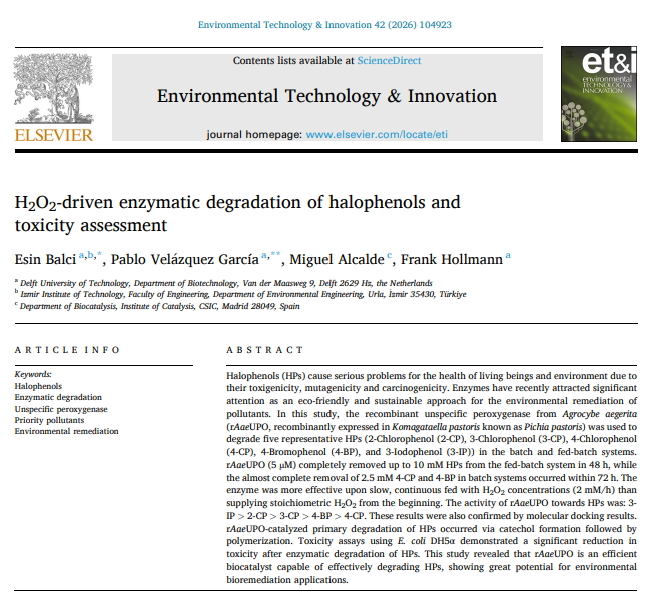
H2O2-driven enzymatic degradation of halophenols and toxicity assessment
Halophenols (HPs) cause serious problems for the health of living beings and environment due to their toxigenicity, mutagenicity and carcinogenicity. Enzymes have recently attracted significant attention as an eco-friendly and sustainable approach for the environmental remediation of pollutants. In this study, the recombinant unspecific peroxygenase from Agrocybe aegerita (rAaeUPO, recombinantly expressed in Komagataella pastoris known as Pichia pastoris) was used to degrade five representative HPs (2-Chlorophenol (2-CP), 3-Chlorophenol (3-CP), 4-Chlorophenol (4-CP), 4-Bromophenol (4-BP), and 3-Iodophenol (3-IP)) in the batch and fed-batch systems. rAaeUPO (5 µM) completely removed up to 10 mM HPs from the fed-batch system in 48 h, while the almost complete removal of 2.5 mM 4-CP and 4-BP in batch systems occurred within 72 h. The enzyme was more effective upon slow, continuous fed with H2O2 concentrations (2 mM/h) than supplying stoichiometric H2O2 from the beginning. The activity of rAaeUPO towards HPs was: 3-IP > 2-CP > 3-CP > 4-BP > 4-CP. These results were also confirmed by molecular docking results. rAaeUPO-catalyzed primary degradation of HPs occurred via catechol formation followed by polymerization. Toxicity assays using E. coli DH5α demonstrated a significant reduction in toxicity after enzymatic degradation of HPs. This study revealed that rAaeUPO is an efficient biocatalyst capable of effectively degrading HPs, showing great potential for environmental bioremediation applications.
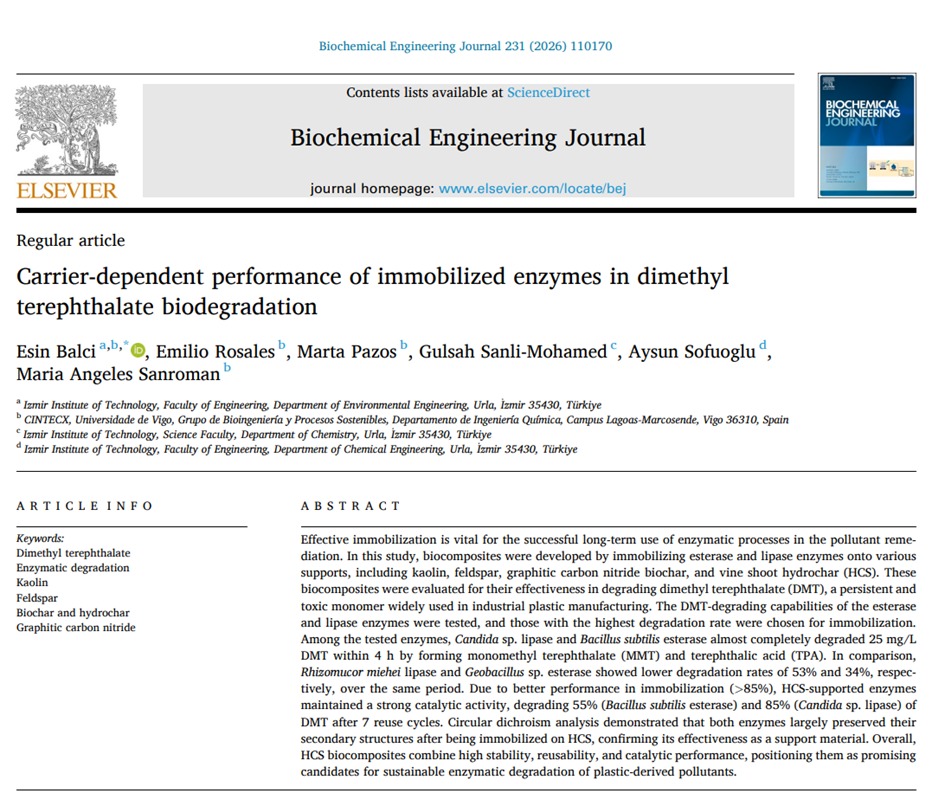
Carrier-dependent performance of immobilized enzymes in dimethyl terephthalate biodegradation
Effective immobilization is vital for the successful long-term use of enzymatic processes in the pollutant remediation. In this study, biocomposites were developed by immobilizing esterase and lipase enzymes onto various supports, including kaolin, feldspar, graphitic carbon nitride biochar, and vine shoot hydrochar (HCS). These biocomposites were evaluated for their effectiveness in degrading dimethyl terephthalate (DMT), a persistent and toxic monomer widely used in industrial plastic manufacturing. The DMT-degrading capabilities of the esterase and lipase enzymes were tested, and those with the highest degradation rate were chosen for immobilization. Among the tested enzymes, Candida sp. lipase and Bacillus subtilis esterase almost completely degraded 25 mg/L DMT within 4 h by forming monomethyl terephthalate (MMT) and terephthalic acid (TPA). In comparison, Rhizomucor miehei lipase and Geobacillus sp. esterase showed lower degradation rates of 53% and 34%, respectively, over the same period. Due to better performance in immobilization (>85%), HCS-supported enzymes maintained a strong catalytic activity, degrading 55% (Bacillus subtilis esterase) and 85% (Candida sp. lipase) of DMT after 7 reuse cycles. Circular dichroism analysis demonstrated that both enzymes largely preserved their secondary structures after being immobilized on HCS, confirming its effectiveness as a support material. Overall, HCS biocomposites combine high stability, reusability, and catalytic performance, positioning them as promising candidates for sustainable enzymatic degradation of plastic-derived pollutants.

Dietary intake of current-use pesticides: Duplicate-meal concentrations, exposure, and health risks through the urbanization ladder
This study aims to characteri dietary exposure to current use pesticides (CUPs) across different urbanization levels in Izmir, Türkiye. The presence of 235 CUPs was investigated using QuEChERS extraction followed by LCMS/MS analysis in 96 duplicate-meal samples collected from rural, suburban and urban households. Nonparametric hypothesis testing was used to compare the levels between the three urbanization groups. Exposure and health risks were estimated for female and male adults. Thiamethoxam, pyrimethanil, and dinoterb were the most frequently detected CUPs mostly exceeding maximum pesticide residue limits (MRLs) of European Commission, whereas the highest median CUPs were triadimenol (29.1 mg.kg− 1 ), chlorantraniliprole (45.2 mg. kg− 1 ), and dinoterb (15.8 mg.kg− 1 ) in urban, suburban, and rural, respectively. Overall, the composition of pesticide cocktail varied across the urbanization levels, with lower levels determined in the rural area. The total targeted pesticide concentration in urban area was significantly higher than that in rural area, while the difference between suburban and urban areas was not significant. The estimated daily intakes of pyrimethanil, thiamethoxam, acetamiprid, spinosyn A, and buprofezin, were higher than the acceptable values. Unapproved CUPs were found in cereal based meals, suggesting contamination during cultivation or storage. The Hazard Quotient and Hazard Index stimates exceeded the thres old by up to ten times, indicating serious health risks showing that dietary exposure to CUPs is critical for food safety and public health.
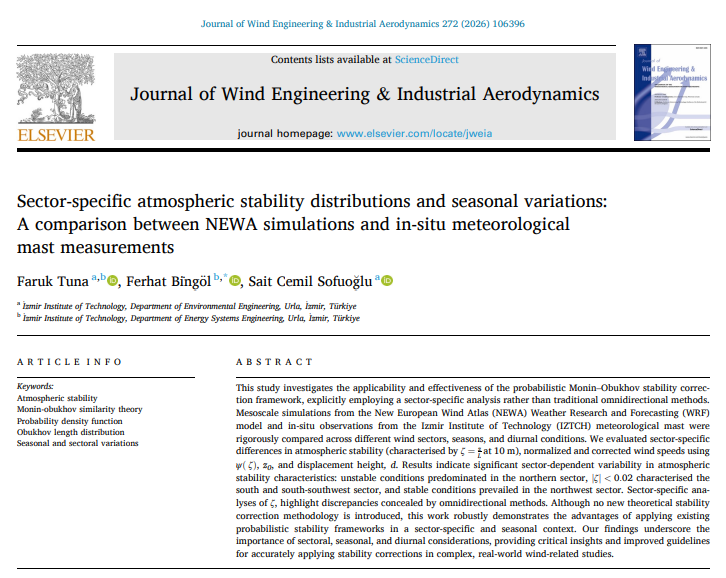
Sector-specific atmospheric stability distributions and seasonal variations: A comparison between NEWA simulations and in-situ meteorological mast measurements
This study investigates the applicability and effectiveness of the probabilistic Monin–Obukhov stability correction framework by explicitly employing a sector specific analysis rather than traditional omnidirectional methods. Mesoscale simulations from the New European Wind Atlas (NEWA) Weather Research and Forecasting (WRF) model and in situ observations from the Izmir Institute of Technology (IZTECH) meteorological mast were rigorously compared across different wind sectors, seasons, and diurnal conditions. We evaluated sector specific differences in atmospheric stability, characterized by ζ = z/L at 10 m, and analyzed normalized and corrected wind speeds using ψ(ζ), z0, and displacement height, d. The results indicate significant sector dependent variability in atmospheric stability characteristics. Unstable conditions predominated in the northern sector, |ζ| < 0.02 characterized the south and south southwest sector, and stable conditions prevailed in the northwest sector. Sector specific analyses of ζ highlight discrepancies that are concealed by omnidirectional methods. Although no new theoretical stability correction methodology is introduced, this work robustly demonstrates the advantages of applying existing probabilistic stability frameworks within a sector specific and seasonal context. Our findings underscore the importance of sectoral, seasonal, and diurnal considerations, providing critical insights and improved guidance for accurately applying stability corrections in complex, real world wind related studies.
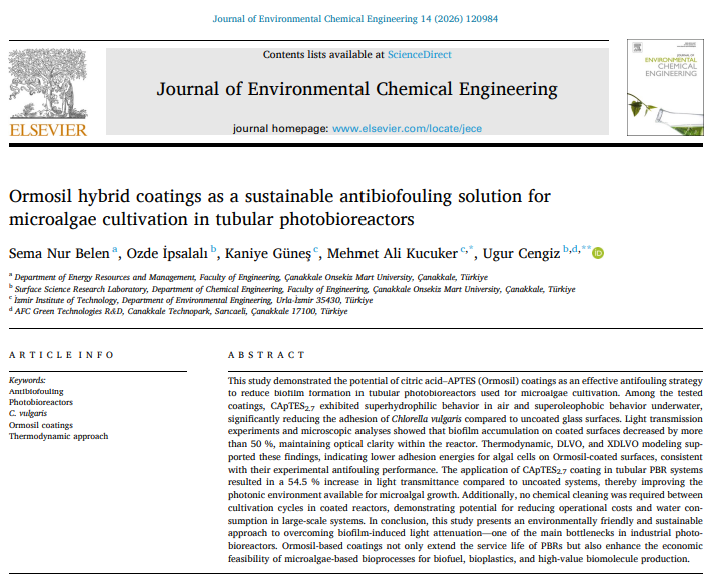
Ormosil hybrid coatings as a sustainable antibiofouling solution for microalgae cultivation in tubular photobioreactors
This study demonstrated the potential of citric acid–APTES (Ormosil) coatings as an effective antifouling strategy to reduce biofilm formation in tubular photobioreactors used for microalgae cultivation. Among the tested coatings, CApTES2.7 exhibited superhydrophilic behavior in air and superoleophobic behavior underwater, significantly reducing the adhesion of Chlorella vulgaris compared to uncoated glass surfaces. Light transmission experiments and microscopic analyses showed that biofilm accumulation on coated surfaces decreased by more than 50 %, maintaining optical clarity within the reactor. Thermodynamic, DLVO, and XDLVO modeling supported these findings, indicating lower adhesion energies for algal cells on Ormosil-coated surfaces, consistent with their experimental antifouling performance. The application of CApTES2.7 coating in tubular PBR systems resulted in a 54.5 % increase in light transmittance compared to uncoated systems, thereby improving the photonic environment available for microalgal growth. Additionally, no chemical cleaning was required between cultivation cycles in coated reactors, demonstrating potential for reducing operational costs and water consumption in large-scale systems. In conclusion, this study presents an environmentally friendly and sustainable approach to overcoming biofilm-induced light attenuation—one of the main bottlenecks in industrial photobioreactors. Ormosil-based coatings not only extend the service life of PBRs but also enhance the economic feasibility of microalgae-based bioprocesses for biofuel, bioplastics, and high-value biomolecule production.
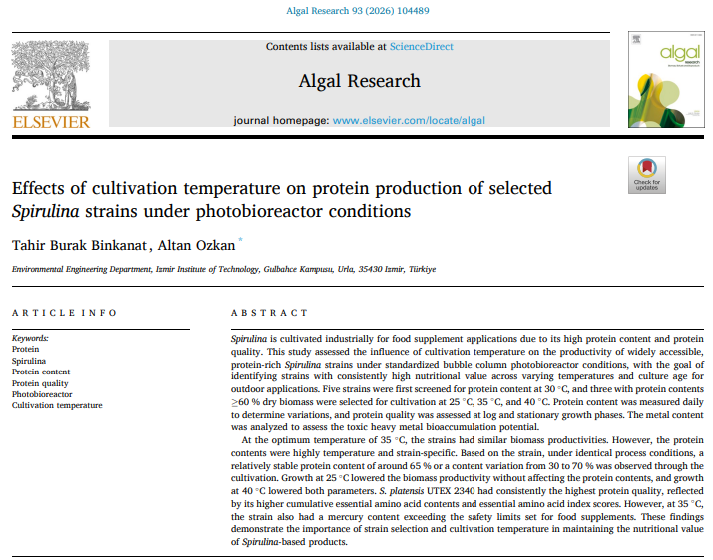
Effects of cultivation temperature on protein production of selected Spirulina strains under photobioreactor conditions
Spirulina is cultivated industrially for food supplement applications due to its high protein content and protein quality. This study assessed the influence of cultivation temperature on the productivity of widely accessible, protein-rich Spirulina strains under standardized bubble column photobioreactor conditions, with the goal of identifying strains with consistently high nutritional value across varying temperatures and culture age for outdoor applications. Five strains were first screened for protein content at 30 °C, and three with protein contents ≥60 % dry biomass were selected for cultivation at 25 °C, 35 °C, and 40 °C. Protein content was measured daily to determine variations, and protein quality was assessed at log and stationary growth phases. The metal content was analyzed to assess the toxic heavy metal bioaccumulation potential. At the optimum temperature of 35 °C, the strains had similar biomass productivities. However, the protein contents were highly temperature and strain-specific. Based on the strain, under identical process conditions, a relatively stable protein content of around 65 % or a content variation from 30 to 70 % was observed through the cultivation. Growth at 25 °C lowered the biomass productivity without affecting the protein contents, and growth at 40 °C lowered both parameters. S. platensis UTEX 2340 had consistently the highest protein quality, reflected by its higher cumulative essential amino acid contents and essential amino acid index scores. However, at 35 °C, the strain also had a mercury content exceeding the safety limits set for food supplements. These findings demonstrate the importance of strain selection and cultivation temperature in maintaining the nutritional value of Spirulina-based products.
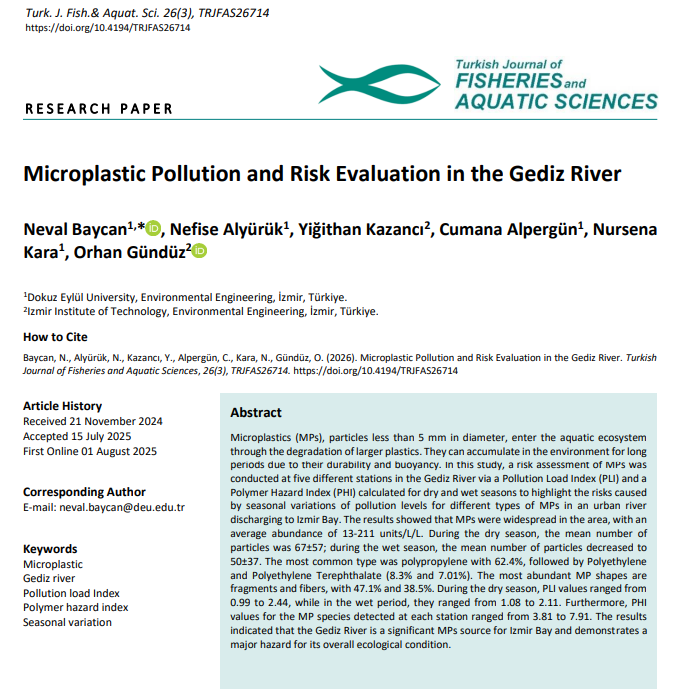
Microplastic Pollution and Risk Evaluation in the Gediz River
Microplastics (MPs), particles less than 5 mm in diameter, enter the aquatic ecosystem through the degradation of larger plastics. They can accumulate in the environment for long periods due to their durability and buoyancy. In this study, a risk assessment of MPs was conducted at five different stations in the Gediz River via a Pollution Load Index (PLI) and a Polymer Hazard Index (PHI) calculated for dry and wet seasons to highlight the risks caused by seasonal variations of pollution levels for different types of MPs in an urban river discharging to Izmir Bay. The results showed that MPs were widespread in the area, with an average abundance of 13 211 units/L/L. During the dry season, the mean number of particles was 67±57; during the wet season, the mean number of particles decreased to 50±37. The most common type was polypropylene with 62.4%, followed by Polyethylene and Polyethylene Terephthalate (8.3% and 7.01%). The most abundant MP shapes are fragments and fibers, with 47.1% and 38.5%. During the dry season, PLI values ranged from 0.99 to 2.44, while in the wet period, they ranged from 1.08 to 2.11. Furthermore, PHI values for the MP species detected at each station ranged from 3.81 to 7.91. The results indicated that the Gediz River is a significant MPs source for Izmir Bay and demonstrates a major hazard for its overall ecological condition.